

The end of a pole is a metal tip onto which you can fit a rubber paw, sometimes called an “asphalt” paw. It seems a small thing, but this is where it is decided how walking feels on different surfaces, how loud it is and how long your poles last. Let me say it right at the start: whoever has one pair of poles and chooses well how to finish them saves themselves half the annoyance.
Rubber paw: pavements and tarmac
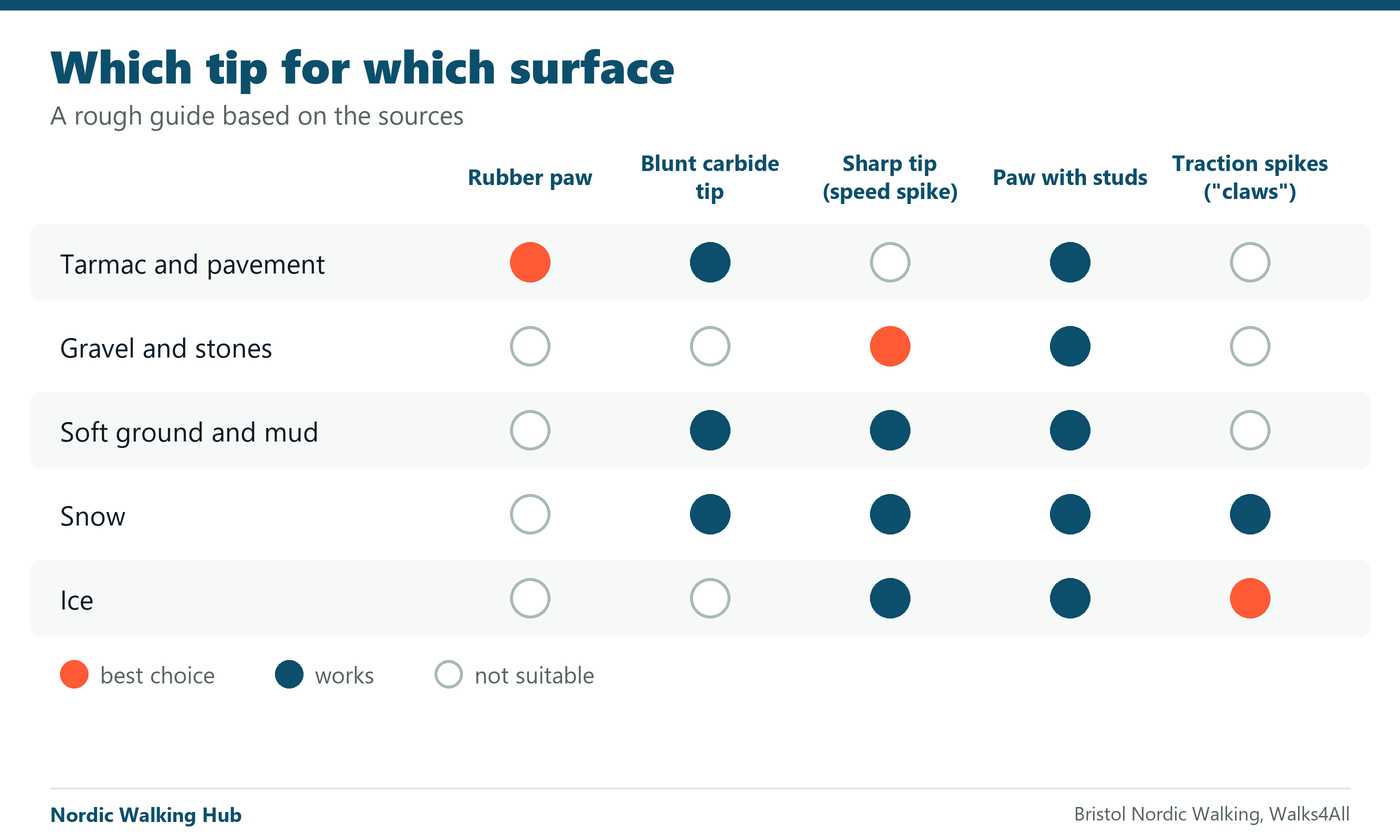
Paws are made for hard surfaces: pavements, tarmac, paving and running tracks. They reduce noise, protect the surface and extend the life of the metal tip. There are also paws made directly for Nordic Walking, slanted and larger, which grip at the push-off on tarmac and help you forward. They have a downside too. When you go from the pavement into mud you have to take them off and put them in your pocket, and some softer paws wear down quickly on a hard surface. Rubber paws need watching: a worn one does not grip, and above all you lose the quiet you wanted to save.
Metal tip: paths and terrain
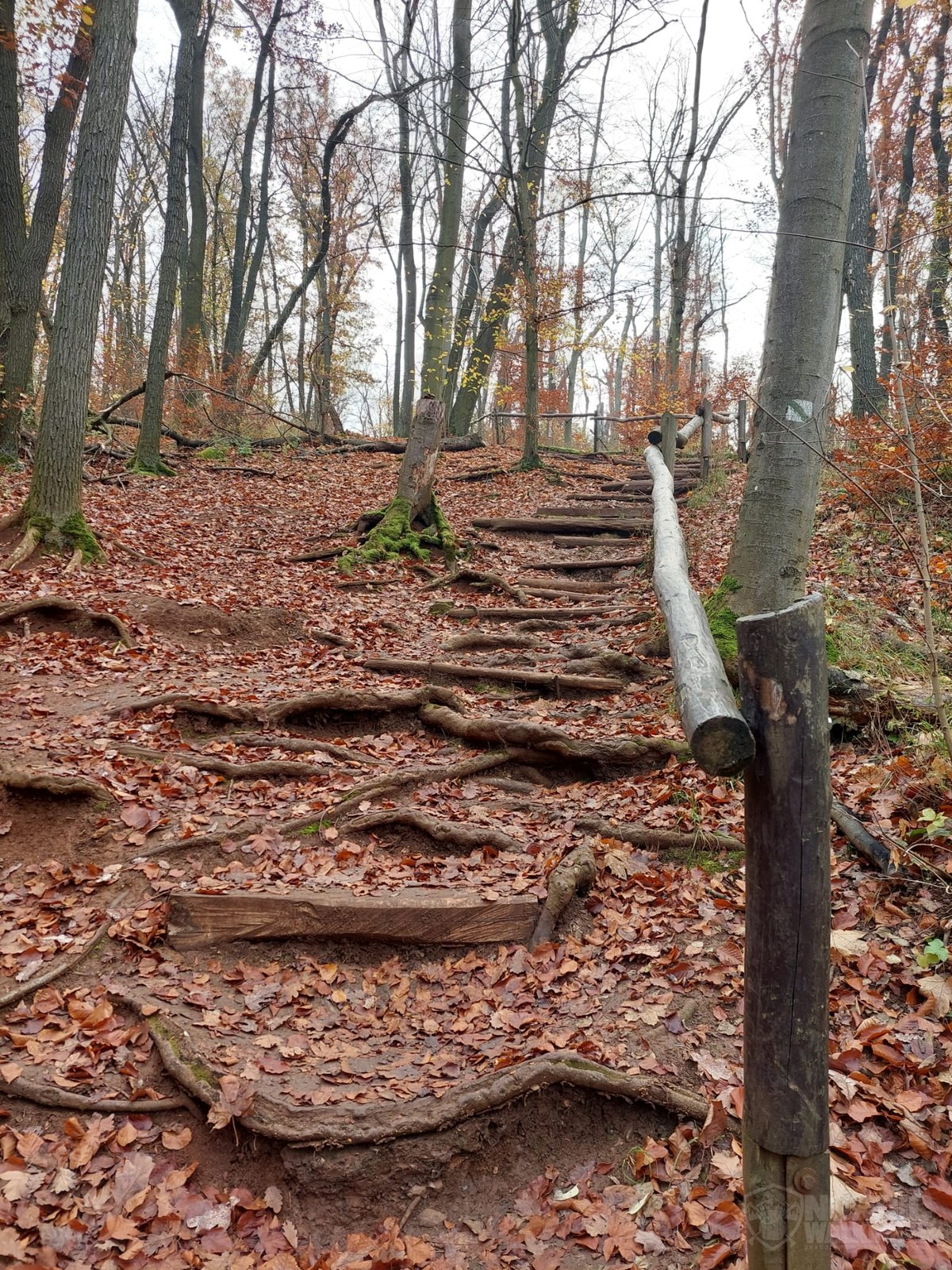
A carbide or tungsten tip suits stony paths, gravel, soil, snow, and climbs and descents. It bites in and holds well. There are two basic shapes: blunt, like trekking poles have, and sharp, the so-called speed spike. The blunt one works on all surfaces including tarmac, but it can slip on stones. The sharp one is great on soft ground, sand and stony tracks, but it likes to get stuck in wet mud and can damage clothing if you are careless.
Carbide lasts a very long time. Over time it does wear, though, which is why it is worth looking at the tip now and then. A sharp tip may no longer be sharp and bites into rock less well. Should it come loose and fall out, the whole tip can be replaced, so you do not need to buy new poles for that.
Ice and winter
According to the sources, tips with pronounced teeth grip best on ice. A universal compromise for alternating paved and forest paths are tips with studs, that is a rubber paw with small metal studs set in the rubber: they have the quietness of rubber and yet a bit of the grip of metal. For ice, a frozen lake or slippery steep terrain there are also special traction spikes, so-called “claws”, screwed on in place of the ordinary tip. They only fit some pole brands, though.
For deep snow you want baskets. These are wide flat discs just above the tip that stop the pole sinking in. For forest mud small, light ones are enough. Both are usually screwed on, just make sure they hold firmly so that you do not lose them on the way.
The strap: the invisible hero
Since we are talking about ends, it is fair to mention the other end too: the strap. It should fit snugly but not choke, and it transfers load to the wrist, so the hand does not have to clench. The strap matters more than you expect: a good padded strap is the difference between a walk after which your hands are relaxed and one after which you have wrung them out. In warm weather ventilated ones help, in winter neoprene ones.
What to choose
If you walk mainly in town and on tarmac, take paws. If you walk in woods and on field paths, the bare tip is enough. Most good poles come with both paws and tips, so you do not have to decide when you buy. You try what suits you, and decide for each walk separately. If you are not sure which tips suit your routes, ask in a group or a shop what is used where you live. The terrain is different everywhere, and the experience of local people cannot be replaced by any guide.
Care and replacement
After every walk rinse the tips of mud and snow so that it does not soak in. Now and then check for cracks, worn tips or loose ends. Keep spare paws at hand: they are consumables and wear down over time. And if you have poles with a telescopic part, a drop of silicone lubricant on the locks works wonders.
Which tips do you use? Tell us in the forum what has worked on your routes.
Frequently asked questions
**Should I buy rubber paws, or is the bare tip enough?** If you walk mainly in town and on tarmac, take paws. If you walk in woods, the bare tip is enough. Most poles come with both, so you do not have to decide when you buy.
**Why do my paws keep falling off?** Usually they are loose or worn. Check whether they sit on the tip, and replace them if necessary. A rubber paw is a consumable.
**My tip is blunt. Is that a fault?** No. A blunt tip is common and works on most surfaces. A sharper one suits soft terrain and rocks, but not all paths.
**When does a tip need replacing?** Only when it is noticeably worn or cracked, or when it slips on terrain where it used to hold. First try whether cleaning it is enough.
Text: Kompas.

Join the discussion
Members can comment. Log in or create a free account.