

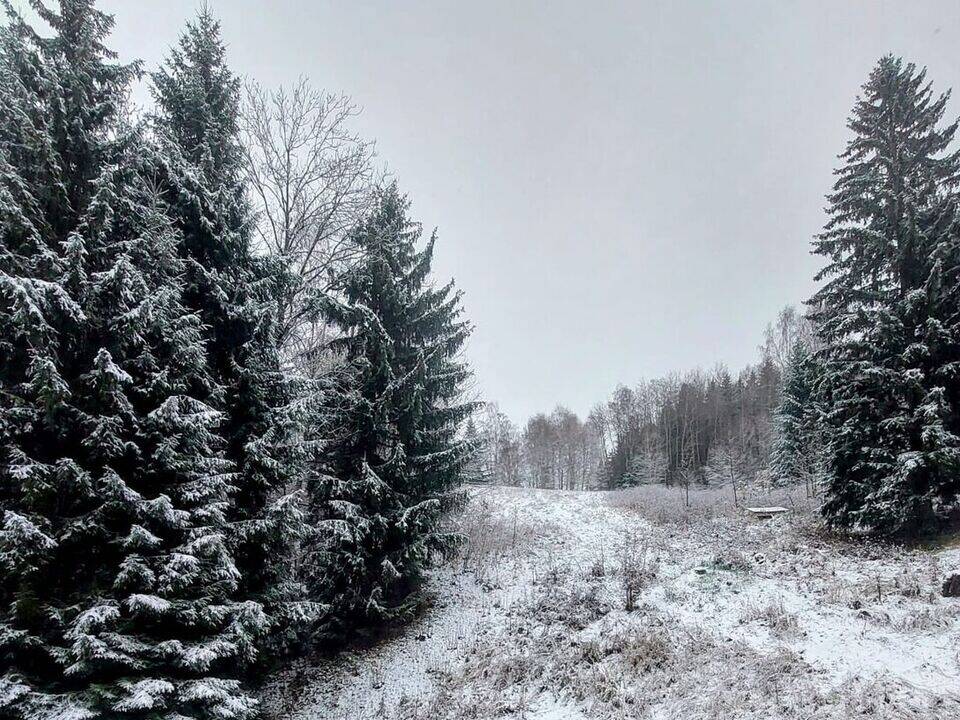
Whoever walks with poles on a dry pavement will sooner or later hear: “Where are your skis?” It need not be ill will, often it is just curiosity or an attempt at a joke. Still, it helps to have an answer ready, whether you want to defuse, explain or just have fun. Here are eight ideas, and everything that is worth knowing about that question.
In brief
- The question “Where are your skis?” is not silly: Nordic Walking really did begin as summer training for skiers.
- A good answer is true, short and comes with a smile.
- Whoever asks out of curiosity will appreciate a lent pole. Whoever asks out of spite loses interest when nothing surprises them except your good mood.
- Answering with an insult makes no sense. Your walk matters more than their joke.
Why people ask
Poles look like ski poles, so the first thing that comes to people’s minds is skis. Nordic Walking really did begin as summer training for skiers, so the question is not as silly as it sounds. More about that in the article Where poles came from. The good news: whoever asks usually does not want an argument. They want to say something, and you have a say in how it turns out.
Calm
- “On the snow. I decided to walk in summer too.”
- “I leave them at home so they can rest.”
- “Thank you for your interest, this is Nordic Walking.”
Calm answers work best when you are not in the mood for a long conversation. You say them with a smile and walk on. Nobody feels lectured and you do not lose your pace.
Curious
- “Do you want to try? I will lend you one pole and you will see for yourself.”
- “It is a sport from Finland, where people trained with poles even without snow.”
Curious answers are for moments when the person is really asking. One question can make a new walker. Lending a pole for twenty metres is the best invitation there is: on your own hands you can feel the difference from ordinary walking right after the first steps.
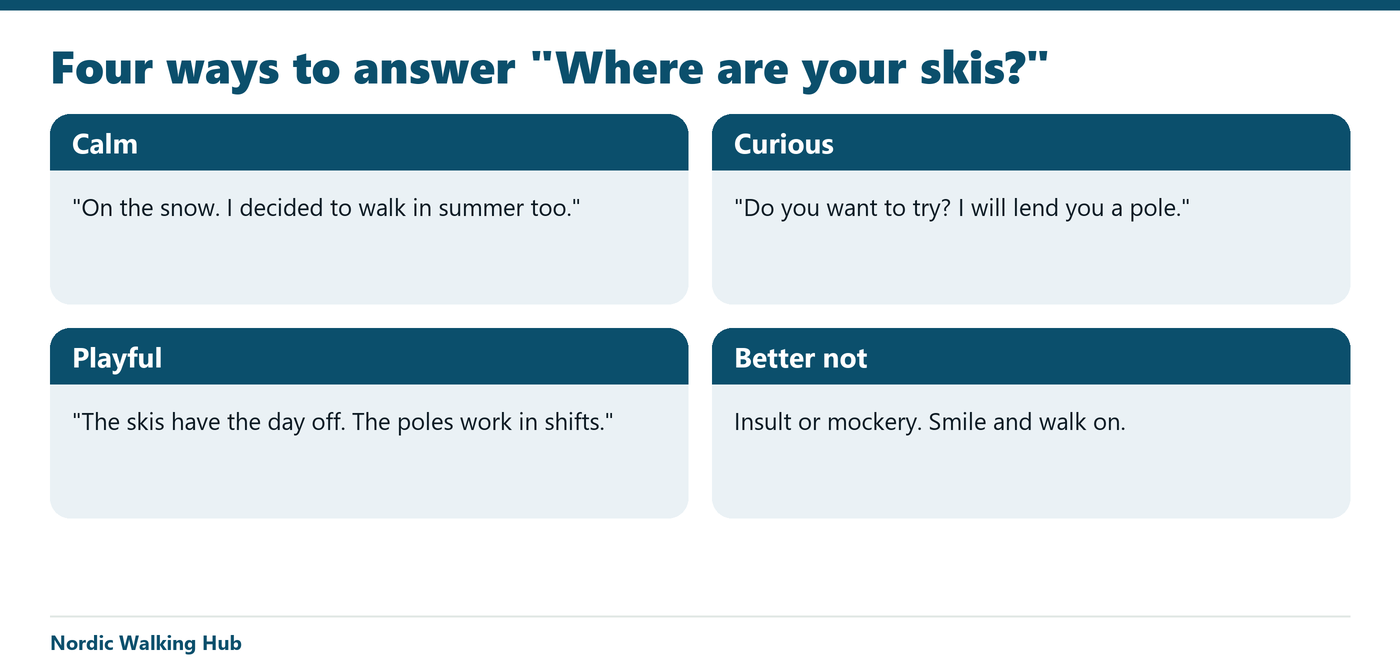
Playful
- “The skis are in the car park, but this path is too skiable.”
- “The skis have the day off. The poles work in shifts.”
- “I ordered the snow, it has not arrived yet.”
Playful ones are for good mood. If you laugh together, you have won: the mocker turns into a teammate and next time waves at you himself.
When you cannot brush it off
It may happen that someone addresses you a third time with the same joke. No harm done. Smile the third time just as you did the first, and walk on. The poles are longer than their patience.
If the remark is really unpleasant, a short “Have a nice day” and walking on is enough. You do not have to convince anyone. The walk is yours, nobody else’s.
One we would rather you skip
Answering with an insult or mockery makes no sense. The person who asks may not know that this is a sport in its own right. And more than the answer, what counts is that you walk on. Your walk matters more than their joke.
What to take from it
The best answer is not the cleverest one but the one you say with a smile. Poles are visible on the street and people simply comment on them. It is the price of being seen, and of perhaps making someone think for the first time that they might try it themselves.
And you?
On the front page there is a poll on how many times you have heard that sentence. Write your best answer in the forum. With your permission we will use it in the next article.
How to answer in different situations
**From a stranger on the pavement.** A short and friendly answer is enough here. Nobody expects a lecture, and neither do you. “On the snow, this is my training”, said with a smile, is plenty.
**From a friend or a neighbour.** They may be funnier, and so can you. Do not try to convince them with words, invite them for a walk. Twenty minutes with poles will teach them more than ten explanations.
**From a child.** Children ask seriously and deserve an answer. “These are poles for walking, not for skiing. Do you want to try?” is better than a joke, because the child understands that you answered them. And they may ask for a pole.
How to prepare your own answer
A good answer has three things: it is true, it is short and it comes with a smile. True means you say nothing you could not repeat. Short means it fits into the two seconds before the passer-by walks on. And with a smile means the listener does not feel they are being defended against.
If you are in no mood for anything, a nod is enough. Nobody forces you to debate poles on every corner.
Why have an answer ready
The worst answers are the ones that occur to you two hours later. If you prepare one sentence in advance, you can say it without thinking and have a smile left over. Pick from the eight ideas above the one that suits you, and repeat it. After the third use it will sound as if it had just occurred to you.
Text: Kompas.

Join the discussion
Members can comment. Log in or create a free account.